You already have a production pipeline. Right now it lives in your head.
CoTube is a production tracker built on the way video actually gets made: ideas, scenes, shots, takes, shoot days, cuts, and what the numbers did after you published — held in the order you actually work.
Try the demo — No sign-up needed. Changes are not saved. · Create an account
One person with a camera, or a small crew on a call sheet: cast, crew, gear, props and risk live in the same project as the shot list. Platform is a field on the project, not the shape of the tool — a 16:9 film, a 9:16 short, a square cut all run the same pipeline.
This is the demo, not a mock-up
Built on the pipeline, not on a board of cards
Every stage of making a video has its own shape. A general-purpose task board flattens all five into cards of the same kind.
- Ideas arrive at the wrong moment — One list, with tags and a checklist. The idea that survives becomes a project without being typed in again.
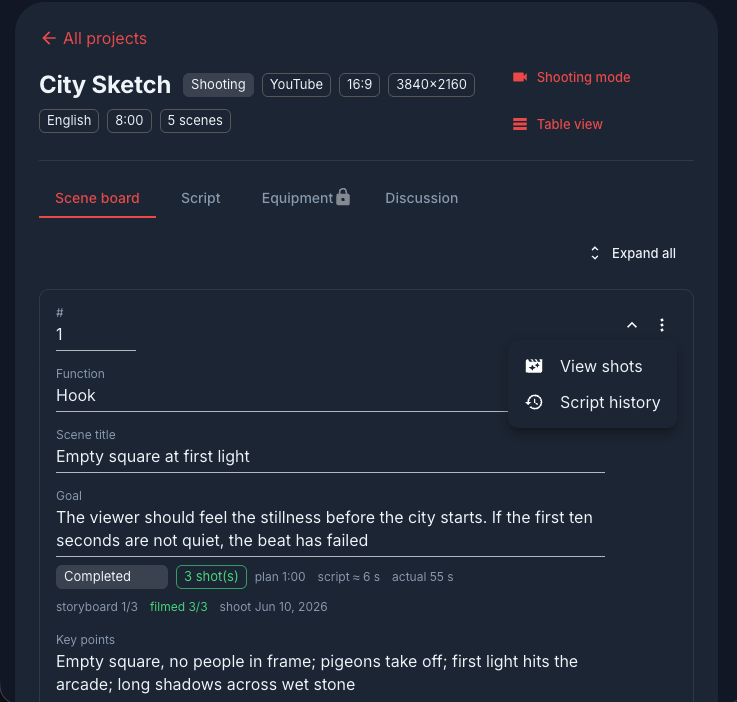
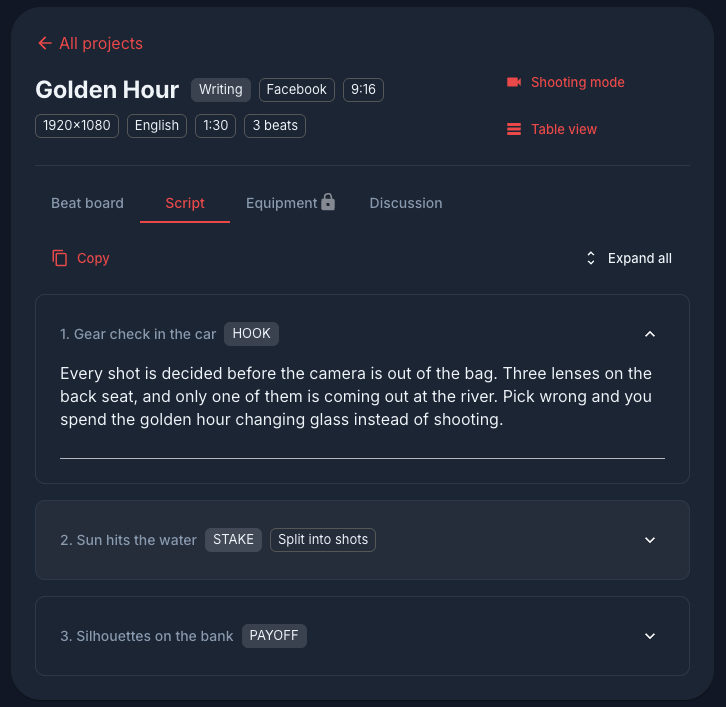
- A script is a decision about order — Beats or scenes — your call, per project — each with the job it does and the points it has to land. Rewrites are kept, not overwritten.
- The shot list is where the film gets built — Size, move, lens, fps, shutter, aperture, ISO and white balance live on the shot itself: the numbers you would otherwise work out again standing on the location.
- A shoot day is logistics, not craft — Cast, crew, location, gear, props and the risks you already know about, on one call sheet — and takes logged as you shoot, with the keeper marked.
- The film isn't done when the cut is — Edit versions, the publish itself and the daily numbers afterward, kept next to the project that produced them.
Where this is right now
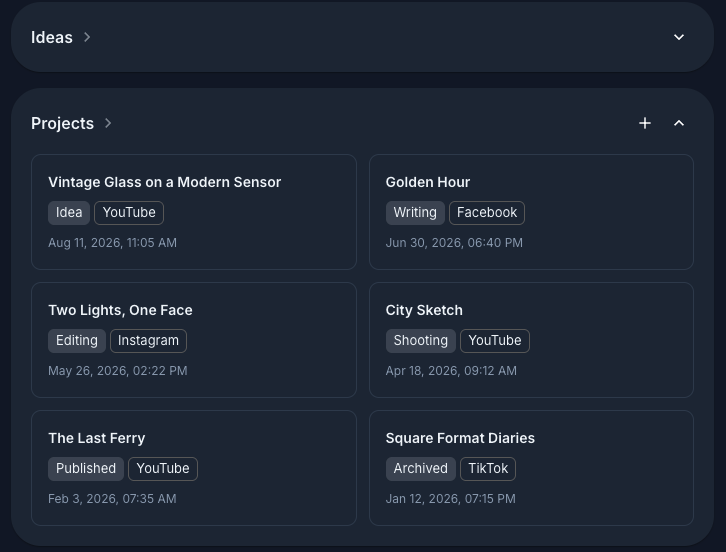
Early. The pipeline works end to end, and the demo is all of it rather than a curated slice — six projects at every stage, from a bare idea to a published film with a month of daily stats; only AI runs are switched off there. Paid features are marked with a lock, and any paid plan can be tried first, no card needed.
What costs money
Everything a one-person shoot needs is free: ideas, beats, script, storyboard, shots, publishing and stats. Creator adds the AI helpers, take marking, guest links and room to work; Team adds working together, a few workspaces and the crew-and-logistics layer — cast, crew, shoot days, gear, props, risk and camera metadata; Studio adds more workspaces and the highest limits. Paid plans are connected by hand for now: we arrange the payment with you personally.